

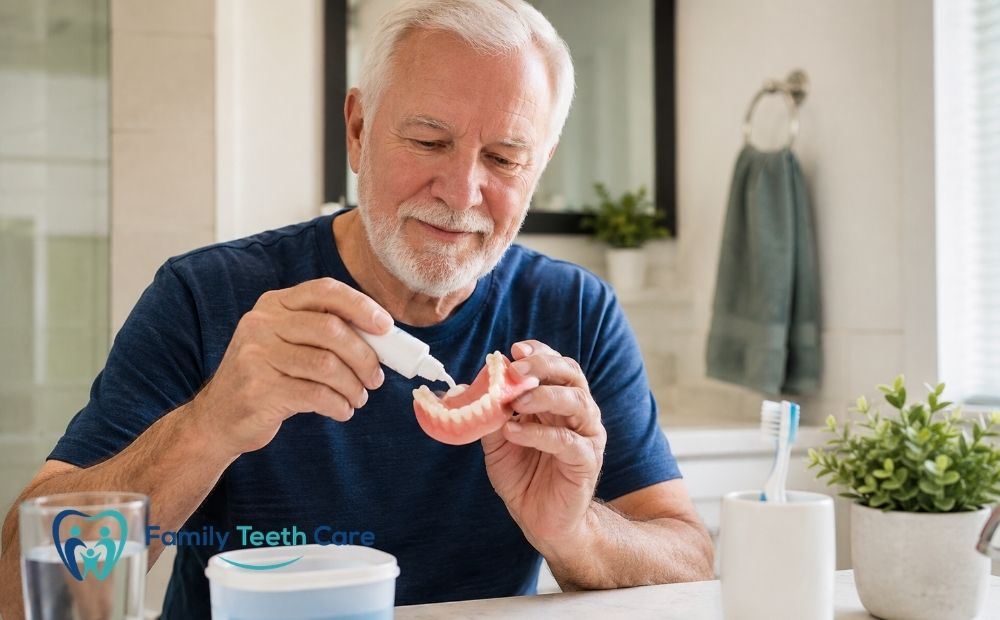
Finding the best denture adhesive can make a big difference in daily comfort, eating, speaking, and smiling with confidence. Dentures are removable replacements for missing teeth, and they can help restore chewing, speech, appearance, and confidence when they fit well. Dentures may be full or partial, and while a well-made denture should fit securely, many people still use adhesive for extra stability, especially during meals, conversations, or social events.
What Is Denture Adhesive?
Denture adhesive is a product used to help dentures stay in place. It is usually applied between the denture and the gum tissue. When used correctly, it can improve grip, reduce small movements, and help create a more secure feeling during the day.
Denture adhesive does not replace a properly fitted denture. It is meant to support comfort and confidence, not fix a denture that is badly loose, broken, or painful. The FDA advises users to follow product instructions, avoid using more than recommended, and consult a dental professional if instructions are unclear.
Why People Use Denture Adhesive
People use denture adhesive for many reasons. Some want better confidence while speaking. Others need extra stability while eating. Some use it because their mouth feels dry, their lower denture moves slightly, or they are still adjusting to new dentures.
A good adhesive can help reduce the fear of dentures slipping in public. This can make eating at restaurants, laughing with friends, or speaking at work feel easier. For many denture wearers, that emotional comfort is just as important as the physical hold.
Does Everyone Need Denture Adhesive?
No, not everyone needs denture adhesive. A properly made and well-fitted denture should usually stay in place with the help of natural suction, gum support, and facial muscles. However, some people still prefer adhesive for extra security.
If you suddenly need more adhesive than before, that may be a sign your denture no longer fits well. Gums and jawbone can slowly change shape after tooth loss, so dentures may become loose over time. Cleveland Clinic explains that dentures are removable oral appliances that replace missing teeth and that proper care and maintenance are important for long-term use.
Types of Denture Adhesive
There are several types of denture adhesive. The best choice depends on your mouth, denture type, saliva level, comfort preference, and daily routine.
Denture Adhesive Cream
Denture adhesive cream is one of the most popular options. It comes in a tube and is applied in small dots or thin strips on the denture. When the denture is placed in the mouth, the cream spreads and helps create a seal.
Creams often provide a strong hold and are easy to find. They may be helpful for people who need dependable grip throughout the day. However, using too much cream can make cleanup messy and may cause adhesive to ooze out around the denture.
The best way to use cream is to start with a small amount. You can add slightly more next time if needed, but you should never cover the entire denture with thick layers.
Denture Adhesive Powder
Denture adhesive powder is sprinkled lightly over the wet denture surface. After shaking off extra powder, the denture is placed in the mouth. The powder mixes with moisture and helps improve suction.
Powder may feel lighter than cream and may be easier to clean for some people. It can be a good option if you dislike thick adhesive texture. However, it may not feel as strong as cream for everyone, especially for lower dentures that move more easily.
Denture Adhesive Strips
Adhesive strips or pads are pre-cut pieces that fit inside dentures. They are less messy than creams and powders because the amount is already controlled. This can make them convenient for beginners.
Strips may be useful for people who want a simple routine. However, they may not fit every denture shape perfectly. Some users may need to trim them for comfort.
Zinc-Free Denture Adhesive
Zinc-free denture adhesive is often preferred by people who use adhesive daily or worry about overuse. Some denture adhesives contain zinc, and while the FDA states that these products can be safe when used in moderation as directed, overuse may contribute to harmful effects.
This does not mean every zinc-containing adhesive is dangerous. The main concern is using too much adhesive for a long time, especially if a loose denture requires repeated heavy application. If you are unsure, ask your dentist which option is safest for your situation.
What Makes the Best Denture Adhesive?
The best denture adhesive is not the same for everyone. A good adhesive should provide reliable hold, feel comfortable, be easy to clean, and not irritate your gums. It should also match your denture type and daily habits.
For example, someone who eats harder foods may prefer a stronger cream. Someone who dislikes mess may prefer strips. Someone with dry mouth may need a product that works well with lower saliva. Someone who uses adhesive every day may prefer a zinc-free formula.
The best choice is the one that helps you feel secure without needing excessive amounts.
Strong Hold vs. Comfortable Hold
Many people want the strongest adhesive possible, but strongest does not always mean best. A very strong hold may feel helpful, but if the product is difficult to remove or irritates your gums, it may not be ideal.
Comfort matters. Your denture should not feel like it is glued painfully to your gums. A good adhesive should create stability while still allowing proper cleaning at the end of the day.
If you feel soreness, burning, swelling, or irritation, stop using the product and speak with a dentist.
How to Apply Denture Adhesive Correctly
Start with clean and dry dentures unless the product instructions say otherwise. Apply a small amount of adhesive. For cream, use small dots or short strips instead of covering the entire surface. For powder, sprinkle lightly and shake off excess. For strips, place the strip as directed and adjust if needed.
Then place the denture in your mouth and press firmly for a few seconds. Bite down gently to help secure the fit. Avoid eating or drinking immediately if the product instructions recommend waiting.
Always follow the label because different products may have different directions.
How Much Denture Adhesive Should You Use?
Use the smallest amount that gives a comfortable hold. If adhesive oozes out when you place the denture in your mouth, you are likely using too much. Too much adhesive can feel uncomfortable, create a messy cleanup, and may increase safety concerns with some products.
The FDA specifically advises not using more adhesive than recommended. If you need large amounts to keep your denture stable, the real problem may be denture fit, not adhesive strength.
How to Remove Denture Adhesive
At the end of the day, remove your dentures gently. Rinse your mouth with warm water to loosen the adhesive. Carefully rock the denture back and forth until it releases. Do not pull too hard.
After removing the denture, clean adhesive residue from your gums with a soft toothbrush, gauze, or damp cloth. Clean the denture thoroughly using a denture brush and suitable denture cleanser.
Do not sleep with adhesive and dentures in place unless your dentist gives specific instructions. Many people benefit from removing dentures at night to give the gums a rest.
Why Denture Fit Matters More Than Adhesive
Adhesive can help, but it cannot solve every denture problem. If your denture is too loose, cracked, worn, or poorly shaped, adhesive may only hide the issue for a short time.
Loose dentures can rub the gums, create sore spots, make eating harder, and affect speech. They may also cause people to use too much adhesive. The NHS explains that dentures fit over the gums and some types clip onto remaining teeth, which means proper fit and support are important for comfort and function.
If your denture no longer feels stable, visit a dentist for adjustment, relining, repair, or replacement.
Signs Your Denture Adhesive Is Not Enough
You may need dental help if your dentures slip often, cause pain, create ulcers, make chewing difficult, or require adhesive several times a day. You should also see a dentist if your bite feels uneven or if your face shape seems to have changed since getting dentures.
Adhesive should improve confidence, not become a daily struggle. If you feel dependent on large amounts, your denture may need professional attention.
Safety Concerns With Denture Adhesive
Denture adhesive is generally safe when used as directed, but overuse can create problems. The biggest safety discussion involves zinc-containing adhesives. The FDA has warned that some denture adhesives contain zinc and that overuse may contribute to harmful effects.
The FDA also issued communication to manufacturers after consumers reported symptoms consistent with zinc toxicity that may be associated with excessive denture adhesive use over long periods.
This is why moderation matters. Use only the recommended amount, choose zinc-free products if advised, and see a dentist if you need more adhesive than normal.
Can Denture Adhesive Help With Lower Dentures?
Lower dentures are often harder to keep stable than upper dentures because the tongue, cheeks, and floor of the mouth constantly move. There is also usually less suction compared with upper dentures.
Adhesive can help lower dentures feel more secure, but fit is still important. If your lower denture lifts when you speak or eat, your dentist may recommend adjustment, reline, or implant-supported options.
Implant-supported dentures can offer better stability for some patients, but they require proper evaluation, enough bone support, and a treatment plan.
Best Denture Adhesive for Eating
For eating, many people prefer cream adhesive because it often gives a stronger seal. This can help reduce food particles getting under the denture and improve confidence while chewing.
However, the best adhesive for eating depends on the person. Some people do well with powder. Others prefer strips because they are less messy. If you regularly eat tougher foods, your denture fit becomes even more important.
Cut food into smaller pieces, chew slowly, and try to use both sides of your mouth evenly. This can reduce denture movement.
Best Denture Adhesive for Beginners
Beginners may prefer adhesive strips because they are simple and less messy. Powder can also be beginner-friendly because it is easy to apply lightly. Creams are popular, but beginners sometimes use too much.
If you are new to dentures, start slowly. Practice speaking at home, eat soft foods first, and learn how your dentures respond. Adhesive can help, but your mouth also needs time to adapt.
Best Denture Adhesive for Dry Mouth
Dry mouth can make dentures feel less stable because saliva helps create suction. People with dry mouth may need extra support from adhesive, but they should also address the dryness itself.
Drink water regularly, avoid tobacco, limit alcohol, and speak with a dentist if dry mouth continues. Some medications and health conditions can cause dry mouth. A dentist may recommend saliva substitutes or other options.
Best Denture Adhesive for Sensitive Gums
If you have sensitive gums, choose an adhesive that feels gentle and does not burn or sting. Zinc-free and flavor-free options may be more comfortable for some people. Avoid products that cause irritation.
Sensitive gums may also mean the denture is rubbing. If soreness continues, do not keep covering the problem with adhesive. A dentist can adjust pressure points and improve comfort.
Cream, Powder, or Strip: Which One Is Best?
Cream may be best for strong hold. Powder may be best for a lighter feel and easier cleaning. Strips may be best for convenience and controlled application.
There is no single winner for everyone. The best method depends on comfort, hold, cleanup, and your denture shape. Many people try more than one type before finding the right match.
Should You Choose Zinc-Free Denture Adhesive?
Zinc-free adhesive can be a smart choice for people who use adhesive every day or worry about accidentally using too much. Since the FDA has warned about potential harmful effects from overusing zinc-containing adhesives, zinc-free options may offer peace of mind.
Still, even zinc-free adhesive should not be overused. If your denture needs large amounts of adhesive, it likely needs professional adjustment.
Denture Adhesive and Bad Breath
Denture adhesive itself is not usually the main cause of bad breath, but poor denture cleaning can be. Food particles, bacteria, and old adhesive can collect on dentures and gums.
Clean your dentures every day and remove adhesive residue from your mouth. Also brush your tongue, gums, and any remaining teeth. Regular dental visits are important, even if you have full dentures.
Denture Adhesive and Gum Health
Healthy gums are essential for comfortable dentures. If adhesive traps debris or is not cleaned properly, gums can become irritated. Wearing dentures continuously without cleaning can also contribute to soreness and infection risk.
Remove dentures daily for cleaning. Let your gums rest as recommended by your dentist. If you notice redness, swelling, bleeding, or sores, book a dental appointment.
Mistakes to Avoid With Denture Adhesive
One common mistake is using too much adhesive. Another is using adhesive to fix a denture that no longer fits. Some people also forget to clean old adhesive off before applying new adhesive.
You should also avoid using household glue or non-dental products on dentures. Only use products made for dentures. If your denture breaks, see a dentist or denture professional for repair.
When to Replace or Reline Dentures
Dentures do not last forever. Over time, the mouth changes and dentures may become loose. Cleveland Clinic notes that the average lifespan of a denture is about seven to 10 years with proper care and maintenance.
A reline may improve the fit if the denture base no longer matches your gums. Replacement may be needed if the denture is worn, cracked, unstable, or no longer supports your bite properly.
How to Choose the Best Denture Adhesive for You
Start by thinking about your main problem. If your denture slips during meals, you may need stronger hold. If cleanup bothers you, powder or strips may be better. If you use adhesive daily, zinc-free may be worth considering. If your gums are sore, you may need a dental adjustment more than a new adhesive.
Read product labels carefully. Use the recommended amount. Pay attention to comfort and cleanliness. Most importantly, ask your dentist if you are unsure.
FAQs About Best Denture Adhesive
What is the best denture adhesive for strong hold?
Cream adhesives often provide strong hold, especially for eating and speaking. However, the best option depends on denture fit, saliva, gum shape, and comfort.
Is zinc-free denture adhesive better?
Zinc-free adhesive may be preferred by people who use adhesive daily or worry about overuse. Zinc-containing adhesives can be safe when used as directed, but the FDA warns that overuse may contribute to harmful effects.
Can I use denture adhesive every day?
Many people use denture adhesive daily, but it should be used only as directed. If you need large amounts every day, your denture may not fit properly.
Why does my denture adhesive ooze out?
Adhesive usually oozes out when too much is applied. Use a smaller amount next time and follow the product directions.
Can denture adhesive fix loose dentures?
Adhesive can help with minor movement, but it cannot properly fix loose dentures. If your dentures slip often, see a dentist for adjustment or reline.
Should I sleep with denture adhesive?
Most people should remove dentures at night for cleaning and gum rest, unless a dentist gives different instructions. Sleeping with dirty dentures and old adhesive can irritate the mouth.
Which is better: denture cream, powder, or strips?
Cream may offer stronger hold, powder may feel lighter, and strips may be cleaner and easier to apply. The best choice depends on personal comfort and denture fit.
When should I see a dentist about denture adhesive?
See a dentist if you need more adhesive than before, your dentures feel loose, you have sore gums, or eating and speaking remain difficult.
Final Thoughts
Choosing the best denture adhesive is about more than finding the strongest hold. It is about comfort, safety, ease of cleaning, gum health, and confidence. Creams, powders, strips, and zinc-free products can all work well when used correctly.
However, adhesive should support a good denture fit, not hide a bad one. If your dentures move often, feel painful, or require heavy adhesive, visit a dentist. A professional adjustment, reline, or new denture may give you better comfort than any adhesive can.
With the right product, proper cleaning, and regular dental care, dentures can feel more secure and help you smile, speak, and eat with greater confidence.
Visit familyteethcare.com for more helpful dental care guides and oral health tips.