

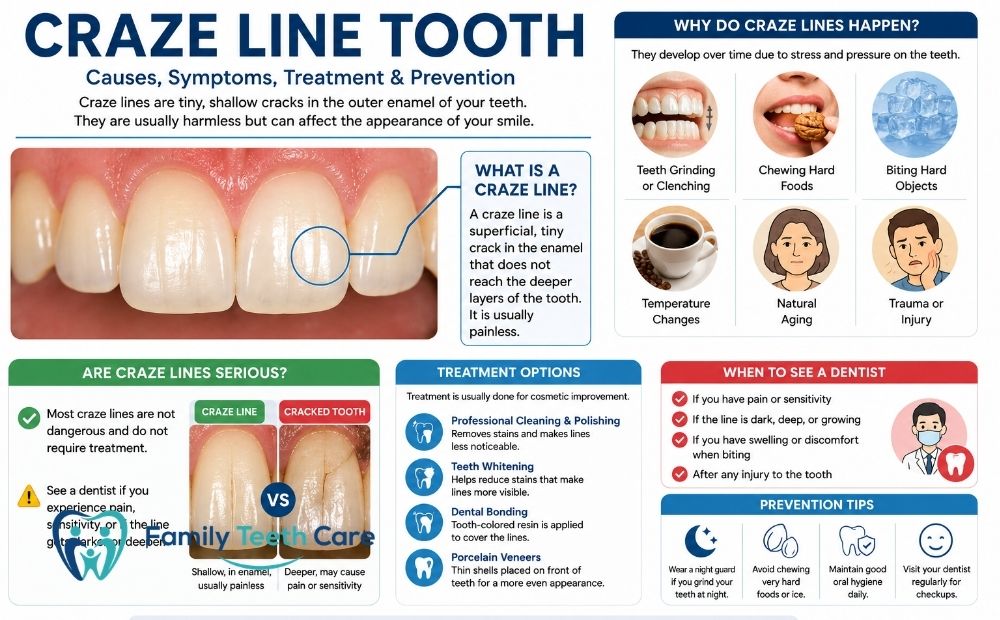
A craze line tooth is a tooth that has tiny, shallow lines or hairline cracks in the outer enamel. These lines are usually most visible on the front teeth, especially under bright light, and many people first notice them while looking closely in the mirror. In most cases, craze lines are not a dental emergency. They are usually superficial cracks in tooth enamel, which is the hard outer layer that protects the tooth. However, because they can look worrying, it is important to understand what they are, why they happen, and when a dentist should check them.
What Is a Craze Line Tooth?
A craze line tooth has very fine cracks that stay within the enamel. These cracks do not usually reach the deeper layers of the tooth. They are often vertical and may look white, gray, yellow, or slightly brown depending on lighting and staining.
Craze lines are common in adults. They can appear slowly over time because teeth go through years of chewing, biting, temperature changes, and daily pressure. Penn Dental Medicine describes craze lines as superficial hairline cracks in the outer layer of adult tooth enamel and notes that they are not usually a dental emergency.
For many people, craze lines are mainly a cosmetic concern. They may not hurt, and they may not require treatment. Still, they should be checked if they become painful, dark, deep, or associated with sensitivity.
Why Do Craze Lines Appear on Teeth?
Craze lines appear because enamel can develop tiny stress marks over time. Teeth are strong, but they are not indestructible. Every day, they handle chewing pressure, biting force, temperature changes from hot and cold foods, and sometimes habits that put extra stress on enamel.
Common causes include teeth grinding, clenching, chewing hard foods, nail biting, using teeth as tools, trauma, and natural aging. Cleveland Clinic explains that cracked or fractured teeth can happen due to teeth grinding, tooth injury, or aging, although craze lines are much more superficial than serious cracks.
If you often clench your jaw or grind your teeth at night, you may be more likely to develop visible enamel lines.
Are Craze Lines Dangerous?
Most craze lines are not dangerous. They are usually shallow and do not weaken the tooth in the same way a deep crack can. A research review available through the National Institutes of Health describes craze lines as tiny, harmless cracks in the outer enamel of the tooth, while deeper cracks can extend into dentin and fractures can go deeper toward the root.
This difference matters. A craze line tooth usually does not cause pain. A cracked tooth may cause sharp pain, sensitivity, swelling, or pain when biting. If you are unsure whether the line is only a craze line or a deeper crack, a dentist should examine it.
Craze Line vs. Cracked Tooth
A craze line and a cracked tooth are not the same thing. A craze line stays in the enamel and is usually painless. A cracked tooth can extend deeper into the tooth structure and may affect dentin, pulp, or even the root.
A cracked tooth may cause pain when chewing, sensitivity to hot or cold, swelling around the gum, or discomfort that comes and goes. Cleveland Clinic notes that cracked teeth can cause pain, swelling, and sensitivity to temperature, and treatment depends on the crack’s location and severity.
If your tooth has a line but no pain, it may be a craze line. If it hurts when you bite, feels sensitive, or has swelling, it may be more serious.
What Do Craze Lines Look Like?
Craze lines often look like very fine vertical lines on the front teeth. They may be barely visible at first. Some people only notice them when light hits the tooth at a certain angle.
They can look white, clear, gray, yellow, or brown. If stains from coffee, tea, red wine, tobacco, or dark foods enter the line, it may become more noticeable.
Some craze lines are short. Others run from the biting edge toward the gumline. Even if they look long, they may still be shallow. The only way to know for sure is to have a dentist check them.
Why Are Craze Lines More Noticeable on Front Teeth?
Craze lines can appear on front or back teeth, but they are easier to notice on front teeth because these teeth are visible when you smile, speak, or look in the mirror.
Front teeth are also thinner than molars in some areas, so light can make enamel lines stand out more. Staining can also make the lines more obvious.
If you drink coffee, tea, cola, red wine, or smoke, the lines may darken over time. This does not always mean the tooth is unhealthy, but it can make the smile look less bright.
Can Craze Lines Cause Tooth Sensitivity?
Craze lines usually do not cause sensitivity because they are limited to enamel. Enamel does not contain nerves. However, if the line is deeper than it looks or if the tooth has enamel wear, gum recession, cavities, or exposed dentin, sensitivity may happen.
You should see a dentist if the tooth reacts strongly to cold, heat, sweets, or biting pressure. Sensitivity can come from many causes, including cavities, gum recession, cracked teeth, worn enamel, or old dental work.
Do not assume every visible line is harmless if symptoms are present.
Can Craze Lines Turn Into Cracks?
Most craze lines do not turn into serious cracks. They often remain superficial for many years. However, repeated stress from grinding, clenching, chewing ice, biting hard objects, or dental trauma may increase the risk of tooth damage.
Good habits matter. If you already have visible craze lines, it is wise to protect your enamel and avoid putting extra force on your teeth.
A dentist can monitor the lines during checkups and compare whether they are changing.
Should You Treat a Craze Line Tooth?
Many craze lines do not need treatment. If the tooth is healthy, painless, and stable, your dentist may simply monitor it. Treatment is usually considered when the lines affect appearance or when there are symptoms.
If the craze lines are stained, whitening may help improve the overall tooth shade, although it may not completely remove the line. If the line is very visible, dental bonding or veneers may be discussed for cosmetic improvement.
Treatment should be based on the health of the tooth, not just appearance.
Teeth Whitening for Craze Lines
Teeth whitening may help if the craze lines are more noticeable because of surface stains. Whitening can make the entire tooth look brighter, which may reduce contrast.
However, whitening may not erase craze lines completely. Sometimes whitening can make the line temporarily more visible because enamel and stain respond differently. A dentist can explain what result is realistic.
If you have sensitivity, cavities, gum problems, crowns, veneers, or bonding, ask a dentist before whitening. Whitening does not work the same way on dental restorations.
Dental Bonding for Craze Lines
Dental bonding can be used when craze lines are very noticeable or when a patient wants cosmetic improvement. Bonding uses tooth-colored resin to cover or reshape part of the tooth.
This can make the front surface look smoother and more even. Bonding is usually less invasive than veneers, but it may stain or chip over time.
Bonding may be a good option if the line is cosmetic and the tooth is otherwise healthy.
Veneers for Visible Craze Lines
Veneers are thin coverings placed on the front of teeth. They can hide visible craze lines, stains, uneven color, and minor shape concerns.
Veneers can create a very polished smile, but they are a bigger commitment than whitening or bonding. In many cases, some enamel may be removed. That is why veneers should be planned carefully.
If craze lines are your only concern, your dentist may recommend simpler options first.
Can a Dentist Polish Craze Lines Away?
Sometimes polishing can reduce surface stains and make craze lines less obvious, but it cannot always remove the lines completely. Since craze lines are tiny cracks in enamel, polishing too much enamel would not be a healthy approach.
A professional cleaning may make your teeth look brighter and cleaner. If the lines are still visible, your dentist can discuss cosmetic options.
The goal should be safe improvement, not aggressive enamel removal.
How Dentists Check a Craze Line Tooth
A dentist may examine the tooth with bright light, magnification, and dental instruments. They may ask whether the tooth hurts when biting or feels sensitive to cold.
Sometimes dentists use special light, bite tests, or X-rays to rule out deeper cracks or decay. Craze lines may not always show clearly on X-rays because they are very shallow, but X-rays can help check for other problems.
If the tooth is painless and the line is limited to enamel, the dentist may simply record it and monitor it.
When Should You Worry About a Line in Your Tooth?
You should see a dentist if the line is dark, deep, painful, or growing. You should also book a visit if you feel sharp pain when biting, sensitivity to hot or cold, swelling, gum pain, or a rough edge.
A line that reaches below the gumline or appears after trauma should also be checked quickly. A serious crack needs early care to prevent further damage.
Do not wait if the tooth hurts. A painful cracked tooth may worsen without treatment.
How to Prevent Craze Lines From Getting Worse
You may not be able to prevent every craze line, especially as teeth age. But you can reduce extra stress on enamel.
Avoid chewing ice, biting pens, opening packages with your teeth, nail biting, and chewing very hard foods. If you grind your teeth at night, ask your dentist about a custom night guard.
A night guard can protect teeth from grinding pressure while you sleep. This may help prevent chips, cracks, and enamel wear.
The Role of Teeth Grinding
Teeth grinding, also called bruxism, is a common reason teeth develop stress marks. Many people grind at night without realizing it. Signs may include jaw soreness, morning headaches, worn teeth, chipped edges, or sensitivity.
If your dentist sees signs of grinding, they may recommend a night guard or other treatment. Managing stress, improving sleep habits, and avoiding chewing on hard objects may also help.
Protecting teeth from grinding is important for long-term enamel health.
Can Acidic Foods Make Craze Lines Worse?
Acidic foods and drinks may not directly create craze lines, but they can weaken enamel over time. Softened enamel is more vulnerable to wear, sensitivity, and staining.
Common acidic items include soda, citrus fruits, vinegar-based foods, energy drinks, and some sports drinks. You do not always need to avoid them completely, but it is smart to rinse with water afterward and avoid brushing immediately after acidic drinks.
Brushing too soon after acid exposure can rub softened enamel.
Daily Care for a Craze Line Tooth
Good oral hygiene helps keep craze lines from staining and helps protect the tooth from decay. Brush twice a day with fluoride toothpaste. Floss daily. Drink water after staining drinks. Visit your dentist for regular cleanings.
If you notice the lines becoming darker, ask your dentist whether staining, plaque, or enamel changes are involved.
A healthy tooth with craze lines can often stay strong for many years with proper care.
Can Craze Lines Lead to Cavities?
Craze lines themselves are usually superficial, but stained or rough areas can sometimes collect pigments or plaque. Healthline notes that craze lines are often cosmetic in nature, though good hygiene is still important because plaque buildup can contribute to cavities.
This is why brushing, flossing, and regular checkups matter. If a line becomes dark or sticky-feeling, a dentist should check it.
Are Craze Lines Common With Age?
Yes, craze lines are common as people get older. Teeth experience years of chewing, temperature changes, and daily wear. Over time, enamel can show tiny stress marks.
This does not mean your teeth are falling apart. It often means the enamel has normal signs of use. However, new pain, sensitivity, or sudden changes should still be checked.
Can Children Have Craze Lines?
Children can have enamel lines or small cracks, especially after trauma, but craze lines are more commonly noticed in adults. If a child has a visible crack or line in a tooth, it is best to have a dentist examine it.
Children’s teeth are still developing, and injuries can affect both baby teeth and permanent teeth. A dentist can decide whether the line is harmless or needs care.
Cosmetic Concerns and Smile Confidence
Even if a craze line tooth is healthy, it can affect confidence. Some people feel uncomfortable when lines appear on front teeth, especially if the lines become stained.
Cosmetic dentistry can often improve the appearance. Whitening, polishing, bonding, and veneers may all be options depending on the case.
A dentist can help you choose the most conservative option that gives a natural result.
What Not to Do With Craze Lines
Do not scrape the tooth with sharp tools. Do not use harsh DIY whitening tricks like lemon juice, vinegar, or abrasive powders. Do not ignore pain if it appears.
Aggressive home treatments can damage enamel and make the tooth more sensitive. If you are worried about a line, professional advice is safer than experimenting.
FAQs About Craze Line Tooth
What is a craze line tooth?
A craze line tooth is a tooth with tiny, shallow cracks in the enamel. These lines are usually superficial and often do not cause pain.
Are craze lines serious?
Most craze lines are not serious. They usually stay in the enamel and do not affect the deeper tooth structure. However, a dentist should check them if there is pain, sensitivity, or dark staining.
Do craze lines go away?
Craze lines usually do not disappear completely on their own. However, whitening, cleaning, bonding, or veneers may make them less noticeable.
Can craze lines turn into cracked teeth?
Most craze lines do not become serious cracks. But repeated pressure from grinding, clenching, or chewing hard objects can increase the risk of deeper tooth damage.
Do craze lines hurt?
Craze lines usually do not hurt because they stay in the enamel. If you feel pain or sensitivity, the problem may be deeper than a simple craze line.
Can whitening fix craze lines?
Whitening may reduce stains and make teeth look brighter, but it may not completely remove craze lines. A dentist can explain what result is realistic.
What causes craze lines?
Common causes include aging, chewing pressure, teeth grinding, clenching, biting hard objects, trauma, and repeated temperature changes.
Should I see a dentist for craze lines?
Yes, it is a good idea to mention them during a dental visit. You should see a dentist sooner if the line is painful, dark, deep, or changing.
Final Thoughts
A craze line tooth can look worrying, especially when the line appears on a front tooth. The good news is that most craze lines are shallow enamel cracks and are not usually dangerous. They are often a normal sign of wear and aging.
Still, it is important to know the difference between a harmless craze line and a deeper cracked tooth. If there is pain, sensitivity, swelling, or discomfort when biting, see a dentist as soon as possible.
For many people, craze lines are mainly cosmetic. Professional cleaning, whitening, bonding, or veneers may help improve appearance if the lines bother you. The best approach is to protect your enamel, avoid harmful habits, and get regular dental checkups.
A healthy smile does not need to be perfect. But if a visible line makes you feel worried or less confident, your dentist can help you understand your options and choose the safest solution.
Visit familyteethcare.com for more helpful dental care guides and oral health tips.