

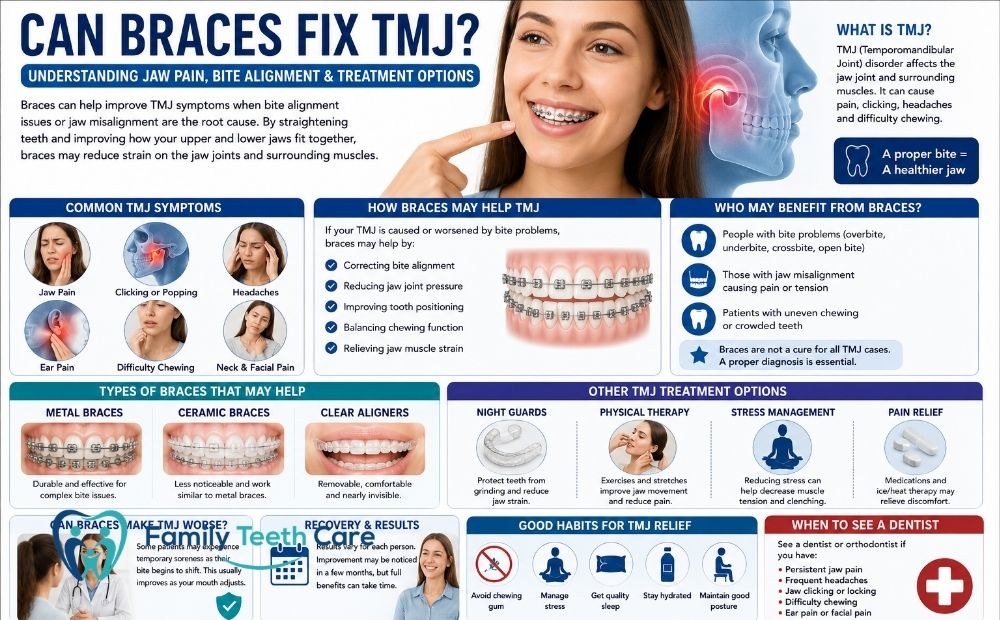
Many people who experience jaw pain, clicking sounds, headaches, or chewing discomfort often ask, “Can braces fix TMJ?” Temporomandibular joint disorder, commonly called TMJ or TMD, affects the jaw joints and surrounding muscles that control mouth movement. In some cases, orthodontic treatment such as braces may help improve symptoms when bite alignment problems contribute to jaw stress.
The temporomandibular joint connects the jawbone to the skull and plays an important role in speaking, chewing, and mouth movement. You can learn more about the temporomandibular joint on Wikipedia. When the jaw joint becomes irritated or misaligned, people may experience pain and discomfort that affects daily life.
Understanding whether braces can help TMJ symptoms depends on the underlying cause of the condition and the severity of bite problems.
What Is TMJ Disorder?
TMJ disorder refers to problems affecting the jaw joints, surrounding muscles, and nearby tissues.
Common TMJ Symptoms
- Jaw pain
- Clicking or popping sounds
- Headaches
- Ear pain
- Difficulty chewing
- Jaw locking
- Facial pain
- Neck tension
Symptoms may range from mild discomfort to severe chronic pain.
What Causes TMJ Problems?
TMJ disorders can develop for several different reasons.
Common Causes of TMJ
- Teeth grinding
- Jaw injury
- Stress and tension
- Bite misalignment
- Arthritis
- Poor posture
- Muscle strain
Because TMJ has multiple possible causes, treatment varies from person to person.
How Bite Problems Affect the Jaw
The way teeth fit together plays a major role in jaw function.
When the bite is uneven or misaligned, extra pressure may be placed on the jaw joints and muscles.
Common Bite Problems
- Overbite
- Underbite
- Crossbite
- Open bite
- Crowded teeth
Orthodontic treatment may sometimes improve these issues and reduce jaw strain.
Can Braces Fix TMJ?
Braces may help certain TMJ cases, especially when bite alignment problems contribute to jaw stress.
How Braces May Help TMJ
- Improve bite alignment
- Reduce uneven jaw pressure
- Correct tooth positioning
- Improve chewing balance
- Support jaw stability
However, braces are not considered a guaranteed cure for every TMJ disorder.
When Braces May Improve TMJ Symptoms
Orthodontic treatment may help if TMJ symptoms are connected to structural bite issues.
Situations Where Braces May Help
- Severe overbite
- Misaligned teeth
- Jaw imbalance
- Uneven chewing pressure
- Crowded teeth affecting bite function
Correcting alignment may reduce stress on the jaw joints over time.
When Braces May Not Help TMJ
Not all TMJ problems are caused by bite alignment.
TMJ Causes Unrelated to Teeth Alignment
- Stress-related jaw clenching
- Muscle tension
- Arthritis
- Injury
- Sleep disorders
In these situations, braces alone may not completely resolve symptoms.
How Orthodontists Evaluate TMJ
Orthodontists and dentists usually perform detailed evaluations before recommending braces for TMJ symptoms.
Common Diagnostic Methods
- Bite examination
- Jaw movement evaluation
- Dental X-rays
- Digital imaging
- Medical history review
Understanding the root cause of jaw pain is important before starting treatment.
Types of Braces Used for TMJ-Related Cases
Several orthodontic options may help improve bite alignment.
Traditional Metal Braces
Metal braces remain one of the most effective methods for correcting severe alignment problems.
Ceramic Braces
Ceramic braces are less visible because they blend more naturally with teeth.
Clear Aligners
Clear aligners are removable transparent trays that gradually move teeth into proper positions.
Many adults prefer clear aligners because of their discreet appearance.
How Long Does It Take for Braces to Help TMJ?
Improvement timelines vary depending on the complexity of the case.
Factors That Affect Results
- Severity of bite issues
- Age
- Jaw condition
- Treatment consistency
- Type of braces used
Some people notice gradual improvement within months, while others may require longer treatment.
Can Braces Make TMJ Worse?
Some patients experience temporary jaw discomfort during orthodontic adjustments.
Possible Temporary Symptoms
- Jaw soreness
- Pressure
- Mild headaches
- Tooth sensitivity
These symptoms often improve as the mouth adapts to tooth movement.
Other Treatments for TMJ
TMJ treatment often involves multiple approaches depending on symptom severity.
Night Guards
Night guards help reduce teeth grinding and jaw clenching during sleep.
Benefits of Night Guards
- Protect teeth
- Reduce muscle tension
- Lower jaw pressure
- Improve sleep comfort
Night guards are commonly recommended for stress-related TMJ symptoms.
Physical Therapy for TMJ
Physical therapy may help improve jaw movement and reduce muscle tension.
Common TMJ Exercises
- Jaw stretching
- Relaxation exercises
- Neck posture correction
- Muscle strengthening
Therapy may improve flexibility and reduce pain over time.
Stress Management and TMJ
Stress is one of the most common contributors to jaw clenching and teeth grinding.
Ways to Reduce Stress
- Better sleep
- Exercise
- Meditation
- Deep breathing
- Reduced caffeine intake
Managing stress may help reduce TMJ flare-ups naturally.
Pain Relief for TMJ
Some people require temporary pain relief during treatment.
Common Pain Management Options
- Ice packs
- Anti-inflammatory medications
- Soft foods
- Jaw rest
Dentists may recommend additional treatments depending on severity.
Soft Foods During TMJ Flare-Ups
Chewing hard foods may increase jaw discomfort.
Easier Foods for TMJ Pain
- Soup
- Yogurt
- Mashed potatoes
- Smoothies
- Scrambled eggs
Soft foods reduce pressure on the jaw joints during painful periods.
Can Jaw Surgery Be Needed?
Severe TMJ cases sometimes require oral surgery, although this is less common.
Situations That May Require Surgery
- Severe joint damage
- Structural abnormalities
- Chronic locking
- Failed conservative treatment
Most TMJ cases improve without surgery.
TMJ and Teeth Grinding
Teeth grinding, also called bruxism, is strongly linked to TMJ symptoms.
Signs of Teeth Grinding
- Worn teeth
- Morning headaches
- Jaw soreness
- Tooth sensitivity
Night guards and stress reduction often help manage grinding.
TMJ and Headaches
Jaw tension may trigger headaches and facial discomfort.
Common Areas of Pain
- Temples
- Jaw muscles
- Neck
- Ears
Reducing jaw strain may help decrease headache frequency.
TMJ and Ear Pain
TMJ disorders may sometimes create symptoms near the ears because of the joint’s location.
Possible Ear-Related Symptoms
- Earaches
- Ringing sounds
- Pressure sensation
- Fullness near the ears
Many people initially mistake TMJ symptoms for ear infections.
Importance of Proper Diagnosis
TMJ disorders can have several different causes, so accurate diagnosis is important.
Not every person with TMJ symptoms needs braces or orthodontic treatment.
Lifestyle Changes That May Help TMJ
Simple lifestyle habits may help reduce jaw tension.
Helpful Habits
- Avoid chewing gum
- Maintain better posture
- Reduce stress
- Limit hard foods
- Avoid excessive jaw movement
Small changes may improve daily comfort significantly.
Frequently Asked Questions
Can braces fix TMJ permanently?
Braces may help TMJ symptoms caused by bite alignment problems, but they are not guaranteed to cure all TMJ disorders.
Do braces help jaw pain?
In some cases, correcting bite issues with braces may reduce jaw pressure and discomfort.
Can TMJ go away without braces?
Yes, many TMJ cases improve with stress management, night guards, physical therapy, and lifestyle changes.
Are clear aligners good for TMJ?
Clear aligners may help certain alignment-related TMJ problems, depending on the individual case.
Can braces cause TMJ?
Braces do not directly cause TMJ, although temporary jaw discomfort may occur during treatment adjustments.
How long does TMJ treatment take?
Treatment timelines vary depending on symptom severity and the chosen treatment method.
Is jaw clicking always serious?
Jaw clicking is common and not always serious, but persistent pain should be evaluated professionally.
Do night guards help TMJ?
Yes, night guards often help reduce jaw clenching and teeth grinding during sleep.
Can stress worsen TMJ?
Yes, stress commonly increases jaw tension and grinding habits.
Should I see an orthodontist for TMJ?
If bite problems or tooth alignment issues may contribute to symptoms, an orthodontic evaluation can be helpful.
Final Thoughts
Many people wonder, “Can braces fix TMJ?” because jaw pain and bite problems often affect comfort, chewing, and daily life. In some cases, braces may help reduce TMJ symptoms by improving bite alignment and reducing uneven pressure on the jaw joints.
However, TMJ disorders have multiple causes, including stress, muscle tension, grinding, arthritis, and injury. Because of this, braces are not always the complete solution for every patient. Proper diagnosis from a dental or orthodontic professional is essential before beginning treatment.
Modern orthodontic care, stress management, physical therapy, and protective night guards may all play important roles in improving TMJ symptoms and supporting long-term jaw health.
For more info visit https://familyteethcare.com