

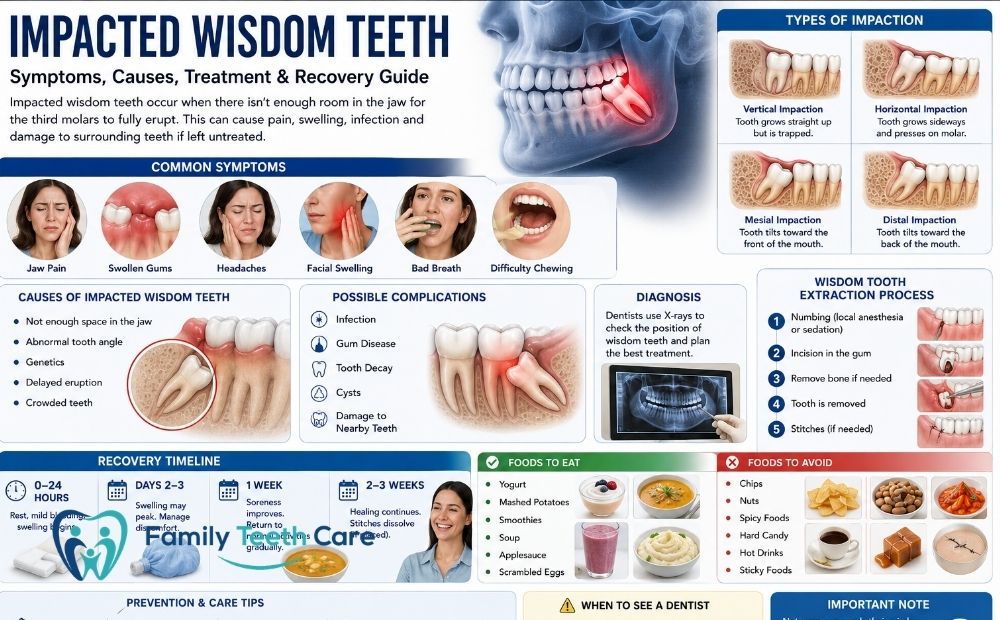
Impacted wisdom teeth are one of the most common dental problems affecting teenagers and adults. Many people experience pain, swelling, jaw pressure, and infection when wisdom teeth fail to grow properly. Understanding impacted wisdom teeth is important because untreated cases may eventually lead to serious oral health complications.
Wisdom teeth are the third set of molars located at the back of the mouth. You can learn more about wisdom teeth on Wikipedia. These teeth usually appear between the ages of 17 and 25, although some people may develop them earlier or later.
In many cases, wisdom teeth do not have enough room to grow normally. When this happens, they may become trapped beneath the gums or grow at unusual angles, causing impaction.
What Are Impacted Wisdom Teeth?
Impacted wisdom teeth are teeth that cannot fully erupt through the gums properly.
Instead of growing straight upward like normal teeth, impacted wisdom teeth may:
- Remain trapped below the gums
- Grow sideways
- Press against nearby teeth
- Partially erupt
Impaction may affect one wisdom tooth or multiple teeth at the same time.
Why Wisdom Teeth Become Impacted
Modern human jaws are often too small to accommodate wisdom teeth properly.
Common Causes of Impacted Wisdom Teeth
- Lack of space in the jaw
- Abnormal tooth angles
- Genetics
- Delayed eruption
- Crowded teeth
Because wisdom teeth are the last molars to develop, they frequently struggle to find enough space to emerge correctly.
Types of Impacted Wisdom Teeth
There are several different types of impaction depending on tooth position and angle.
Vertical Impaction
Vertical impaction occurs when the wisdom tooth grows upright but remains trapped beneath the gums.
Horizontal Impaction
Horizontal impaction happens when the tooth grows sideways and pushes directly against nearby molars.
This type often causes significant pressure and discomfort.
Mesial Impaction
Mesial impaction occurs when the tooth tilts toward the front of the mouth.
It is one of the most common types of wisdom tooth impaction.
Distal Impaction
Distal impaction happens when the tooth tilts toward the back of the mouth.
This form is less common but may still create oral health problems.
Common Symptoms of Impacted Wisdom Teeth
Some people experience severe symptoms, while others may not notice problems immediately.
Common Symptoms Include
- Jaw pain
- Swollen gums
- Redness around the gums
- Difficulty chewing
- Bad breath
- Headaches
- Ear pain
- Facial swelling
Pain may come and go depending on inflammation and infection levels.
Impacted Wisdom Teeth and Jaw Pain
Jaw pain is one of the most common symptoms associated with impacted wisdom teeth.
Pressure from trapped teeth may irritate surrounding nerves, gums, and jaw structures.
Signs the Jaw May Be Affected
- Pain while chewing
- Jaw stiffness
- Difficulty opening the mouth
- Tenderness near molars
Persistent jaw discomfort should be evaluated by a dental professional.
Swollen Gums Around Wisdom Teeth
Partially erupted wisdom teeth often trap food particles and bacteria beneath the gums.
This may lead to inflammation and infection.
Symptoms of Gum Inflammation
- Swelling
- Tenderness
- Bleeding gums
- Pus formation
- Bad taste in the mouth
Proper cleaning around impacted teeth can become very difficult.
Wisdom Tooth Infection
Infections around impacted wisdom teeth are common.
A partially erupted tooth creates openings where bacteria may grow.
Signs of Infection
- Severe pain
- Fever
- Swelling
- Difficulty swallowing
- Pus drainage
Untreated infections may spread to nearby tissues and require urgent treatment.
Do Impacted Wisdom Teeth Always Need Removal?
Not all impacted wisdom teeth require immediate extraction.
Some impacted teeth remain harmless if they do not cause pain, infection, or damage.
However, dentists often monitor wisdom teeth regularly through exams and X-rays.
Why Dentists Recommend Wisdom Tooth Removal
Dentists may recommend extraction to prevent future complications.
Common Reasons for Removal
- Pain
- Infection
- Tooth crowding
- Gum disease
- Cysts
- Damage to nearby teeth
Removing wisdom teeth early is often easier before roots become fully developed.
How Dentists Diagnose Impacted Wisdom Teeth
Dental professionals usually diagnose impacted wisdom teeth through:
- Oral examination
- Dental X-rays
- Panoramic imaging
X-rays help dentists evaluate tooth position, root structure, and nearby nerve locations.
Wisdom Tooth Extraction Procedure
Wisdom tooth removal is one of the most common oral surgery procedures.
What Happens During Extraction
- Local anesthesia or sedation is provided
- Gum tissue may be opened
- The tooth may be divided into smaller pieces
- The tooth is carefully removed
- Stitches may be placed afterward
Modern extraction techniques help reduce discomfort and improve recovery.
Does Wisdom Tooth Removal Hurt?
Many patients worry about pain during surgery.
Modern anesthesia and sedation methods significantly reduce discomfort during the procedure itself.
Common Recovery Symptoms
- Swelling
- Mild bleeding
- Soreness
- Jaw stiffness
Pain is usually manageable with prescribed medications and proper aftercare.
Recovery After Wisdom Tooth Removal
Recovery times vary depending on the complexity of the extraction.
Typical Recovery Timeline
- First 24 hours: bleeding and swelling
- Days 2–3: peak swelling
- One week: reduced discomfort
- Several weeks: full healing
Following dentist instructions carefully helps improve healing.
Foods to Eat After Wisdom Tooth Removal
Soft foods are recommended during recovery.
Recommended Foods
- Yogurt
- Mashed potatoes
- Soup
- Smoothies
- Applesauce
- Scrambled eggs
Hard or crunchy foods should be avoided initially.
Foods to Avoid After Extraction
Certain foods may irritate healing tissue.
Foods to Avoid
- Chips
- Nuts
- Spicy foods
- Hard candy
- Hot drinks
- Sticky foods
Avoiding these foods helps reduce irritation and complications.
What Is Dry Socket?
Dry socket is a painful condition that sometimes develops after tooth extraction.
It occurs when the protective blood clot becomes dislodged too early.
Symptoms of Dry Socket
- Severe throbbing pain
- Bad breath
- Exposed bone
- Pain spreading toward the ear
Dentists can treat dry socket to improve healing and reduce discomfort.
How to Prevent Dry Socket
Proper aftercare reduces dry socket risk.
Prevention Tips
- Avoid smoking
- Avoid straws
- Follow cleaning instructions
- Rest properly after surgery
Protecting the blood clot is essential for healthy healing.
Impacted Wisdom Teeth and Tooth Crowding
Some people worry that wisdom teeth may shift nearby teeth.
While research varies, impacted wisdom teeth can place pressure on surrounding molars and contribute to crowding concerns.
Can Wisdom Teeth Cause Headaches?
Yes, wisdom teeth may sometimes contribute to headaches and facial pressure.
Jaw tension and nerve irritation can create discomfort extending into the head and ears.
Can Wisdom Teeth Affect Sinuses?
Upper wisdom teeth may occasionally create sinus pressure because of their location near sinus cavities.
Possible Sinus-Related Symptoms
- Facial pressure
- Congestion
- Headaches
- Pain near upper molars
Dentists can evaluate whether wisdom teeth contribute to sinus discomfort.
Wisdom Teeth in Teenagers and Adults
Wisdom teeth typically appear during late teenage years or early adulthood.
Common Age Range
- 17 to 25 years old
Some people never develop wisdom teeth at all.
Sedation Options for Wisdom Tooth Surgery
Different sedation options may be available depending on procedure complexity.
Common Sedation Methods
- Local anesthesia
- Nitrous oxide
- IV sedation
- General anesthesia
Dentists recommend sedation based on patient needs and anxiety levels.
Cost of Wisdom Tooth Removal
Extraction costs vary depending on:
- Number of teeth removed
- Impaction severity
- Sedation type
- Insurance coverage
More complex surgical extractions usually cost more than simple removals.
Frequently Asked Questions
What are impacted wisdom teeth?
Impacted wisdom teeth are molars trapped beneath the gums or unable to erupt properly.
Do impacted wisdom teeth always hurt?
Some impacted teeth cause severe pain, while others remain symptom-free for years.
Can impacted wisdom teeth cause infection?
Yes, partially erupted wisdom teeth often trap bacteria and increase infection risk.
Is wisdom tooth removal painful?
Modern anesthesia and sedation significantly reduce pain during extraction procedures.
How long does recovery take?
Most people recover within one to two weeks, although complete healing may take longer.
What foods can I eat after surgery?
Soft foods like yogurt, soup, mashed potatoes, and smoothies are usually recommended.
What is dry socket?
Dry socket occurs when the protective blood clot after extraction becomes dislodged prematurely.
Can impacted wisdom teeth cause headaches?
Yes, jaw pressure and nerve irritation may contribute to headaches.
At what age should wisdom teeth be removed?
Many dentists evaluate wisdom teeth during the late teenage years or early adulthood.
Can impacted wisdom teeth damage nearby teeth?
Yes, impacted teeth may sometimes press against nearby molars and contribute to dental damage.
Final Thoughts
Impacted wisdom teeth are a common dental issue that may lead to pain, swelling, infection, jaw pressure, and oral health complications if left untreated. Early diagnosis through dental exams and X-rays helps dentists determine whether monitoring or extraction is necessary.
Modern wisdom tooth removal procedures are generally safe and effective, with improved anesthesia and recovery techniques making treatment more comfortable than ever before. Understanding symptoms, recovery expectations, and aftercare instructions can help patients feel more prepared and confident during treatment.
Regular dental checkups remain one of the best ways to identify impacted wisdom teeth early and prevent future complications.
For more info visit https://familyteethcare.com