

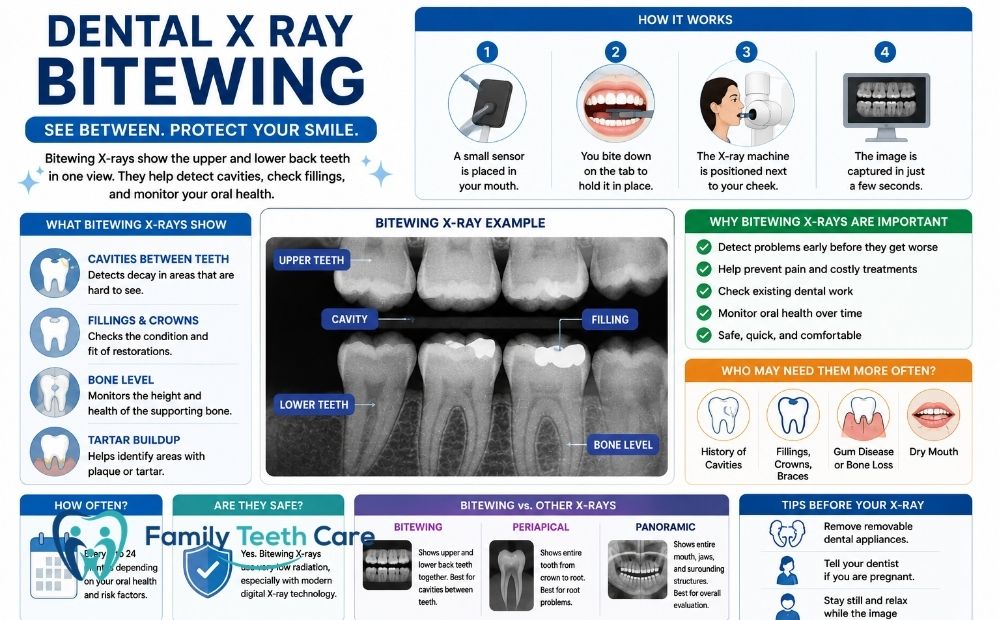
A dental x ray bitewing is one of the most common dental images used during routine checkups. It helps dentists see the upper and lower back teeth in one view, especially the tight spaces between teeth where cavities often start. In modern dental radiography, bitewing X-rays are important because they can reveal hidden decay, check old fillings and crowns, and monitor bone levels before dental problems become painful or expensive to treat.
What Is a Dental X Ray Bitewing?
A dental x ray bitewing is a small X-ray image that shows the crowns of the upper and lower teeth together. The name “bitewing” comes from the small tab or holder that the patient bites down on while the image is taken.
This type of X-ray is usually focused on the back teeth, such as premolars and molars. These teeth have wide surfaces and tight contact points, which makes them more likely to trap plaque and food between them.
Dentists commonly use bitewing X-rays to detect cavities between teeth, also called interproximal cavities. These cavities can be difficult to see during a normal dental exam because they develop in hidden areas where teeth touch.
Why Dentists Use Bitewing X-Rays
Dentists use bitewing X-rays because not every dental problem is visible with the eyes alone. Even with a dental mirror, bright light, and careful examination, the areas between back teeth can remain hidden.
A bitewing image helps dentists check between teeth, under old fillings, around crown edges, and near the bone supporting the teeth. The American Dental Association explains that dental radiographs help dentists evaluate and diagnose many oral diseases and conditions, but dentists must weigh the benefit of taking X-rays against radiation exposure.
This means bitewing X-rays should be used when they help with diagnosis, prevention, or treatment planning.
What Does a Dental X Ray Bitewing Show?
A dental x ray bitewing can show cavities between teeth, early decay under fillings, problems around crowns, tartar buildup, and changes in bone levels.
Cleveland Clinic describes bitewing X-rays as images that show cavities between teeth and below the gumline. Another Cleveland Clinic dental X-ray resource notes that bitewing X-rays can detect decay between teeth, changes in bone thickness caused by gum disease, and help check the fit of crowns or restorations.
This makes bitewing X-rays very useful for preventive dentistry. They help dentists find small problems early before they become larger and more difficult to treat.
Why Cavities Between Teeth Are Hard to See
Cavities between teeth are hard to see because the contact area between teeth is very tight. A dentist may not be able to see decay in these spaces during a visual exam.
Brushing cleans many surfaces of the teeth, but it does not fully clean between teeth. That is why flossing or using interdental brushes is important. When plaque stays between teeth, bacteria produce acids that weaken enamel and start decay.
A bitewing X-ray can show these hidden areas more clearly. On the image, decay may appear as a darker area in the tooth structure. This helps the dentist decide whether the tooth needs monitoring, fluoride, better cleaning, or a filling.
What Happens During a Bitewing X-Ray?
The process is simple and quick. A dental assistant or dentist places a small digital sensor or film inside your mouth. You gently bite down on a holder to keep it in the right position.
Then the X-ray machine is placed next to your cheek. You stay still for a few seconds while the image is taken. Most modern dental offices use digital X-rays, so the image appears on a computer screen almost immediately.
The entire process usually takes only a few minutes. Many patients need two or four bitewing images, depending on how many teeth the dentist needs to check.
Does a Dental X Ray Bitewing Hurt?
A dental x ray bitewing should not hurt. However, some patients may feel slight pressure or discomfort from the sensor inside the mouth.
This can happen if you have a small mouth, sensitive gums, or a strong gag reflex. If the sensor feels sharp or uncomfortable, tell the dental team. They can adjust the position, use a smaller sensor, or work more quickly.
The image itself takes only a few seconds, so any discomfort is usually short.
Are Bitewing X-Rays Safe?
Bitewing X-rays are generally considered safe when used properly and only when needed. Dental X-rays use a low amount of radiation, and modern digital systems often reduce exposure compared with older film methods.
The FDA says dentists should order radiographs only when they expect the additional diagnostic information to affect patient care. This means bitewing X-rays should not be taken without a reason. They should be recommended based on your oral health, symptoms, age, cavity risk, gum condition, and treatment history.
If you are worried about radiation, ask your dentist why the X-ray is needed and how often it should be taken for your situation.
How Often Do You Need a Dental X Ray Bitewing?
There is no single schedule for everyone. Some patients need bitewing X-rays more often because they have a higher risk of cavities or gum disease. Others may need them less often if their oral health is stable.
You may need bitewings more regularly if you have frequent cavities, many fillings, crowns, bridges, braces, dry mouth, gum disease, or poor oral hygiene.
If your teeth are healthy, your gums are stable, and you have no recent cavities, your dentist may recommend bitewings less often. The best schedule depends on your personal dental risk.
Dental X Ray Bitewing for Children
Children may need bitewing X-rays because cavities can grow quickly in baby teeth. Baby teeth have thinner enamel than adult teeth, which means decay can spread faster.
Bitewing images help dentists check between baby teeth and newly erupted permanent teeth. This can prevent small cavities from turning into painful infections.
However, children should only receive X-rays when needed. The dentist should consider age, cavity risk, symptoms, and dental history before recommending them.
Dental X Ray Bitewing for Adults
Adults may need bitewing X-rays to check for hidden cavities, monitor old fillings, examine crowns, and evaluate bone levels.
Many adults already have dental restorations. Decay can sometimes form around or under these restorations. Bitewing X-rays help dentists detect these problems early.
Adults with gum disease may also need bitewing X-rays to monitor bone loss. Since gum disease can progress silently, imaging can show changes that may not be obvious during a regular exam.
Bitewing X-Rays and Gum Disease
A bitewing X-ray can show bone levels around teeth. This is important because gum disease can damage the bone that supports the teeth.
However, gum disease is not diagnosed by X-rays alone. Dentists also examine the gums directly. They may measure gum pockets, check for bleeding, look for swelling, and see whether teeth are loose.
Bitewing images add useful information by showing whether bone loss is present and whether it is changing over time.
Bitewing X-Rays and Old Fillings
Bitewing X-rays are very useful for checking old fillings. Sometimes decay forms around the edge of a filling. This is called recurrent decay.
Recurrent decay may not be visible from the outside at first. A bitewing image can show whether a filling is leaking, breaking down, or allowing decay to form underneath.
Finding this early can help protect the tooth before damage becomes deeper.
Bitewing X-Rays and Dental Crowns
Crowns cover teeth, but the tooth underneath still needs care. Decay can sometimes form at the edge of a crown, especially near the gumline.
A dental x ray bitewing can help dentists check crown margins and look for early signs of decay. If you have crowns, bridges, or older dental work, regular checkups are important.
Dental restorations are strong, but they do not make teeth immune to decay or gum problems.
Dental X Ray Bitewing vs. Periapical X-Ray
A bitewing X-ray and a periapical X-ray are different.
A bitewing X-ray shows the crowns of the upper and lower back teeth together. It is best for checking cavities between teeth and monitoring bone levels.
A periapical X-ray shows the entire tooth from crown to root tip. Dentists use it when they need to check root infections, abscesses, trauma, deep decay, or pain around a specific tooth.
Both types are useful, but they answer different dental questions.
Dental X Ray Bitewing vs. Panoramic X-Ray
A panoramic X-ray shows a wide view of the whole mouth, including teeth, jaws, sinuses, and jaw joints. Dentists may use panoramic images for wisdom teeth, orthodontic planning, jaw problems, or general mouth evaluation.
A bitewing X-ray is more focused. It gives a close view of the back teeth and the spaces between them.
For detecting small cavities between teeth, bitewing X-rays are often more useful because they show those tooth surfaces in greater detail.
What If You Have a Strong Gag Reflex?
Some patients feel nervous about bitewing X-rays because the sensor sits inside the mouth. If you have a strong gag reflex, tell the dental team before they begin.
They may use a smaller sensor, adjust the angle, work quickly, or guide you with breathing techniques. Breathing slowly through your nose can help.
Most bitewing images are taken quickly, so discomfort usually does not last long.
Can Pregnant Patients Have Bitewing X-Rays?
Pregnant patients should always tell their dentist before any X-ray. Dental X-rays may still be taken when necessary, especially if there is pain, swelling, infection, or urgent dental need.
If the X-ray is not urgent, the dentist may delay it. If it is needed, the dental team can take protective steps and only capture the images required.
Never hide pregnancy from your dental team. This helps them choose the safest approach.
Digital Bitewing X-Rays
Many dental clinics now use digital bitewing X-rays. Digital systems are fast, clear, and easy to store.
The image appears on a screen almost immediately. The dentist can zoom in, adjust brightness, compare with older images, and explain findings more clearly.
Digital bitewings are helpful not only for diagnosis but also for patient education. They allow patients to see what the dentist is talking about.
Why You Should Not Skip Recommended Bitewing X-Rays
Some patients avoid X-rays because they do not feel pain. But cavities and gum disease can develop silently. By the time pain begins, the problem may already be advanced.
A dental x ray bitewing can help find hidden problems early. Early treatment can protect more natural tooth structure and prevent bigger dental work later.
If your dentist recommends bitewings, ask what they are checking for. A good dentist will explain why the images are useful for your care.
Can Bitewing X-Rays Prevent Dental Problems?
Bitewing X-rays do not prevent dental problems by themselves. However, they help dentists detect problems early, which can stop them from becoming worse.
Prevention still depends on daily habits. Brush twice a day, floss or clean between teeth daily, use fluoride toothpaste, drink water, limit sugary snacks, and visit your dentist regularly.
When small problems are found early, your dentist may recommend fluoride, sealants, improved cleaning, or a small filling before the issue becomes serious.
How to Prepare for a Dental X Ray Bitewing
You usually do not need special preparation. If you wear removable dental appliances, you may be asked to remove them.
If you have a strong gag reflex, sensitive mouth, anxiety, or pregnancy, tell the dental team before the X-ray. This helps them make the process safer and more comfortable.
During the X-ray, try to stay relaxed, bite gently, and hold still for a few seconds.
What Your Dentist Looks for on a Bitewing X-Ray
Your dentist checks several things on the image. They look for dark areas between teeth that may suggest cavities. They check fillings and crown edges. They look at bone levels around the teeth. They may also compare the image with older bitewings.
Comparison is important. A small area may only need monitoring if it stays the same. But if it grows, your dentist may recommend treatment.
Can You Refuse a Dental X Ray Bitewing?
Yes, you can refuse any dental procedure, including X-rays. However, it is better to ask your dentist why the X-ray is recommended before refusing.
If the dentist is concerned about hidden cavities, bone loss, or problems under old dental work, refusing bitewings may make diagnosis harder.
A good dental decision should be based on understanding the benefits, risks, and purpose of the X-ray.
How Bitewing X-Rays Help Save Teeth
One of the biggest benefits of bitewing X-rays is early diagnosis. When a cavity is small, treatment is usually easier. When decay becomes deep, it may reach the nerve and cause pain or infection.
By catching decay early, dentists can often preserve more natural tooth structure. This is better for long-term dental health.
A dental x ray bitewing may seem like a small part of a checkup, but it can play a major role in protecting your smile.
FAQs About Dental X Ray Bitewing
What is a dental x ray bitewing?
A dental x ray bitewing is a small X-ray image that shows the upper and lower back teeth in one view. It helps dentists detect cavities between teeth and monitor bone levels.
Why is it called a bitewing?
It is called a bitewing because the patient bites on a small tab or holder during the X-ray. This keeps the sensor or film in the correct position.
What does a bitewing X-ray show?
It shows the crowns of the upper and lower back teeth, spaces between teeth, fillings, crowns, and part of the supporting bone.
Is a dental x ray bitewing safe?
Yes, it is generally safe when used properly and recommended only when needed. Dental X-rays use a low amount of radiation, and modern digital imaging can reduce exposure.
How often do I need bitewing X-rays?
It depends on your oral health. Patients with frequent cavities or gum disease may need them more often. Patients with healthy teeth and low cavity risk may need them less often.
Does a bitewing X-ray hurt?
No, the X-ray itself does not hurt. Some patients may feel mild pressure from the sensor or holder, but the process is quick.
Can bitewing X-rays detect cavities?
Yes. Bitewing X-rays are especially helpful for finding cavities between back teeth, where decay can be hard to see during a normal exam.
Can bitewing X-rays show gum disease?
They can show bone loss around teeth, which may be linked with gum disease. Dentists also check gum health directly with a clinical exam.
Are bitewing X-rays needed for children?
Children may need bitewings if they are at risk for cavities or if the dentist needs to check hidden areas between teeth. The decision depends on the child’s dental condition.
Can I refuse a dental x ray bitewing?
Yes, but it is best to ask your dentist why it is recommended. Refusing needed X-rays may make it harder to detect hidden dental problems.
Final Thoughts
A dental x ray bitewing is a simple but important part of preventive dental care. It helps dentists find hidden cavities, check old fillings and crowns, and monitor bone levels around the teeth.
Even if your teeth feel fine, a small cavity may be forming between teeth where it cannot be seen during a regular visual exam. Bitewing images help dentists catch these problems early, before they become painful or more expensive to treat.
The main benefit of bitewing X-rays is early detection. When dental problems are found early, treatment is usually simpler, smaller, and more affordable.
Bitewing X-rays are quick, usually painless, and safe when recommended properly. Your dentist should suggest them based on your personal dental needs, not just as a routine habit. If you are unsure why you need one, ask your dentist to explain what they are checking.
Good dental care is not only about treating pain. It is about preventing problems before they become serious. That is why a dental x ray bitewing can be an important part of keeping your teeth healthy, strong, and protected.
Visit familyteethcare.com for more helpful dental care guides and oral health tips.