

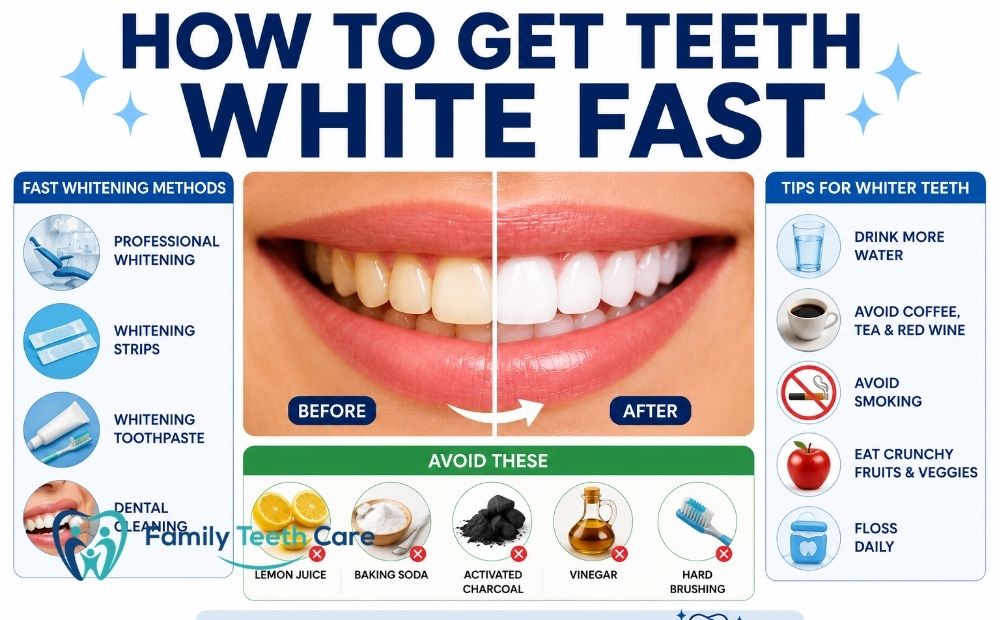
If you are searching for how to get teeth white fast, you probably want a brighter smile for an event, photo, meeting, wedding, interview, or simply because your teeth look dull. Teeth whitening is one of the most popular parts of modern cosmetic dentistry, but fast results should never come at the cost of enamel damage, gum irritation, or tooth sensitivity. The safest approach is to understand what causes yellow teeth, which whitening methods work quickly, and which home tricks you should avoid.
Can You Really Get Teeth White Fast?
Yes, you can make your teeth look whiter quickly, but the result depends on the type of staining. Surface stains from coffee, tea, red wine, tobacco, colored foods, or plaque buildup may improve faster than deeper internal discoloration.
If your teeth look yellow because of surface stains, professional cleaning, whitening toothpaste, whitening strips, or in-office whitening may help. If your teeth are naturally darker, deeply stained, or covered with crowns, veneers, fillings, or bonding, whitening may be more limited.
The American Dental Association explains that whitening products usually contain hydrogen peroxide or carbamide peroxide, which break stains into smaller pieces and make the color less concentrated. The ADA also notes that whitening works on natural teeth, not tooth-colored restorations such as crowns or fillings.
The Fastest Safe Option Is Professional Whitening
If you want the fastest visible whitening, professional whitening at a dental clinic is usually the best choice. A dentist can use stronger whitening materials than most at-home products while protecting your gums and checking whether whitening is safe for your teeth.
Professional whitening is especially helpful when you need quick results before a special event. Cleveland Clinic notes that professional teeth whitening is an option for faster results compared with many over-the-counter products.
The biggest advantage is safety. A dentist can check for cavities, gum disease, sensitivity, enamel wear, exposed roots, and old restorations before whitening. This helps reduce the risk of pain, uneven color, or gum irritation.
Start With a Dental Cleaning
If you want your teeth to look whiter fast, a dental cleaning can make a noticeable difference. Plaque and tartar can make teeth look yellow, dull, or stained. A professional cleaning removes buildup that brushing cannot always remove at home.
A cleaning does not bleach the natural tooth color, but it can reveal a cleaner and brighter surface. For many people, this is the best first step before whitening because whitening products work better on clean teeth.
If your teeth look dull because of tartar or surface stains, cleaning may improve your smile quickly without bleaching.
Use Whitening Strips Correctly
Whitening strips can help brighten teeth at home. They usually work best over several days or weeks, but some people may notice early improvement after the first few uses.
The key is to follow the instructions exactly. Do not leave strips on longer than recommended. Do not use them more often than the label says. Overuse can cause tooth sensitivity and gum irritation.
Cleveland Clinic warns that overusing whitening strips or gels can cause temporary sensitivity or gum irritation, and aggressive bleaching may lead to tooth erosion or other dental issues.
Try Whitening Toothpaste for Surface Stains
Whitening toothpaste can help remove surface stains and make teeth look brighter. It is not as strong as professional whitening, and it will not change deep tooth color quickly, but it can help with stains from food and drinks.
Use a soft-bristled toothbrush and brush gently for two minutes. Do not scrub aggressively. Hard brushing can wear enamel and irritate gums, which may make teeth look worse over time.
Whitening toothpaste is best for mild stains and daily maintenance.
Floss for a Cleaner-Looking Smile
Flossing may not sound like a whitening method, but it can make your smile look cleaner fast. Food particles and plaque between teeth can make the smile look dull and unhealthy.
Floss gently between all teeth once a day. If your gums bleed, it may be a sign of gum inflammation, especially if you do not floss regularly. Be gentle and consistent.
A clean smile often looks brighter even before bleaching.
Rinse After Coffee, Tea, and Dark Foods
If you want to get teeth white fast, you also need to stop new stains from forming. Coffee, tea, cola, red wine, berries, tomato sauce, curry, and dark sauces can stain teeth.
Rinse your mouth with water after drinking or eating staining foods. This helps wash away pigments before they settle on enamel.
Using a straw for cold dark drinks may also reduce contact with front teeth.
Avoid Smoking and Tobacco
Tobacco is one of the biggest causes of yellow and brown tooth stains. It can also contribute to bad breath, gum disease, and oral health problems.
If you want whiter teeth quickly, avoid smoking, chewing tobacco, or other tobacco products. Even a good whitening treatment will not last long if staining habits continue.
Quitting or reducing tobacco can improve both smile appearance and oral health.
Drink More Water
Water helps keep the mouth clean and fresh. It rinses away food particles, acids, and stain-causing pigments. It also supports saliva flow, which naturally protects teeth.
A dry mouth can make teeth look dull and can worsen bad breath. Drinking water throughout the day is one of the simplest ways to support a brighter smile.
Choose Smile-Friendly Foods
Some foods can help your mouth feel cleaner. Crunchy fruits and vegetables like apples, carrots, and celery can help remove some surface debris while chewing.
Cheese, plain yogurt, and milk are less staining than dark sauces and sugary snacks. If you have a special event, avoid dark-colored foods before it.
Small food choices can make your teeth look cleaner and fresher for photos or meetings.
Be Careful With Baking Soda
Baking soda can remove some surface stains because it is mildly abrasive. Some toothpastes include baking soda for this reason. However, rubbing plain baking soda aggressively on teeth is not a good idea.
Too much abrasion can wear enamel over time. If you want to use baking soda, choose a toothpaste made for teeth rather than making harsh home mixtures.
Never mix baking soda with lemon juice or vinegar. Acid plus abrasion can be harmful to enamel.
Avoid Lemon Juice, Vinegar, and Harsh DIY Whitening
Many online whitening hacks promise fast results, but some can damage your teeth. Lemon juice, vinegar, charcoal powder, and harsh scrubbing can weaken enamel or irritate gums.
Acidic products can soften enamel. Abrasive powders can scratch the surface. Once enamel is damaged, it does not grow back.
A fast whitening result is not worth long-term sensitivity or enamel loss.
Do Not Overuse Hydrogen Peroxide
Hydrogen peroxide is used in many whitening products, but that does not mean you should use strong peroxide directly at home. Whitening products are designed with controlled concentrations and instructions.
Using peroxide incorrectly can irritate gums, cause sensitivity, or burn soft tissues. Teeth whitening is generally considered safe when done properly, but Cleveland Clinic notes that temporary tooth sensitivity and gum irritation are common possible side effects.
If you want fast whitening, use approved products or speak with a dentist.
Why Teeth Whitening Can Cause Sensitivity
Whitening products often use peroxide-based ingredients. These ingredients can pass through enamel and reach dentin, which may irritate the inner tooth area and cause temporary sensitivity.
Sensitivity may feel like a sharp reaction to cold drinks, hot foods, or air. It usually improves after stopping or reducing whitening, but strong pain should not be ignored.
If your teeth are already sensitive, ask your dentist before using whitening products.
Crowns, Veneers, and Fillings Do Not Whiten
One important thing many people do not know is that whitening does not work on all dental materials. Crowns, veneers, bonding, and fillings do not whiten like natural teeth.
This means whitening may make natural teeth brighter while restorations stay the same color. The result can look uneven if those restorations are visible when you smile.
The ADA notes that whitening affects natural teeth, not restorations. If you have dental work on front teeth, ask a dentist before whitening.
Best Fast Whitening Routine at Home
If you want a quick improvement at home, start with simple and safe steps. Brush gently with fluoride toothpaste. Floss carefully. Rinse with water after meals. Avoid coffee, tea, tobacco, red wine, and dark sauces. Use whitening toothpaste for surface stains.
If you use whitening strips, follow the instructions exactly. Do not combine too many whitening methods in one day. For example, do not use whitening strips, harsh toothpaste, baking soda, and peroxide rinses all together.
Too much whitening at once can irritate your teeth and gums.
Best Fast Whitening Routine Before an Event
If you have an event tomorrow or this week, focus on what is safe and realistic. Book a professional cleaning if possible. Ask your dentist about in-office whitening if you want a stronger result.
At home, brush gently, floss, drink water, and avoid staining foods and drinks. Use a whitening toothpaste if you do not have sensitivity. For photos, choose lip colors with cooler tones because they can make teeth appear whiter by contrast.
Do not try extreme DIY hacks the night before an event. Gum irritation or tooth sensitivity can ruin your confidence more than slightly yellow teeth.
How White Can Teeth Get Fast?
The result depends on your natural tooth color, enamel thickness, stain type, age, habits, and dental history. Some people see a noticeable improvement quickly. Others need multiple whitening sessions.
Teeth do not need to be paper-white to look attractive. A healthy, clean, natural shade often looks better than an artificial bright white.
The best goal is a brighter smile that still looks natural.
When You Should Not Whiten Your Teeth
You should avoid whitening until you speak with a dentist if you have untreated cavities, gum disease, broken teeth, exposed roots, severe sensitivity, mouth sores, or dental restorations on visible teeth.
Whitening unhealthy teeth can cause pain and uneven results. Treating dental problems first is safer and more effective.
A healthy foundation always comes before cosmetic whitening.
Why Dentist-Supervised Whitening Is Safer
Dentist-supervised whitening is safer because the dentist can check your mouth first, choose the right product strength, protect your gums, and guide you if sensitivity happens.
The NHS states that using a kit from a dentist or having whitening done at a dental surgery is the safest way to whiten teeth because the chemicals are strong and should be used by dental professionals who know how to protect teeth and gums.
This does not mean every store-bought product is unsafe. It means strong whitening should be used carefully and correctly.
Avoid Unqualified Whitening Providers
Be careful with whitening offered by untrained or unlicensed providers. Strong whitening chemicals can harm gums and teeth if used incorrectly.
The UK General Dental Council warns that people offering tooth whitening while not on the dental register are likely breaking the law and risk prosecution. Even if laws are different in your country, the safety message is useful: choose trained dental professionals for strong whitening treatments.
How to Keep Teeth White After Fast Whitening
Once your teeth look brighter, protect the result. Brush twice daily, floss daily, and visit your dentist regularly. Avoid tobacco. Rinse after coffee, tea, cola, or red wine. Drink water often.
If you had professional whitening, your dentist may recommend custom trays or a maintenance plan. Follow their instructions carefully.
Whitening is not permanent. Your habits decide how long the result lasts.
Common Mistakes That Make Teeth Yellow Again
Many people whiten their teeth but then return to staining habits immediately. Drinking coffee all day, smoking, skipping flossing, and ignoring dental cleanings can make stains return quickly.
Another mistake is over-whitening. Some people use too many products because they want instant results. This can cause sensitivity and irritation without creating a healthier smile.
A balanced routine is better than aggressive whitening.
FAQs About How to Get Teeth White Fast
What is the fastest way to whiten teeth?
The fastest safe method is usually professional whitening at a dental clinic. It can give more noticeable results than most home products.
Can I get white teeth overnight?
You may make your teeth look brighter overnight, especially if stains are mild. But deep stains usually need more time or professional treatment.
Does whitening toothpaste work fast?
Whitening toothpaste can remove surface stains, but it usually does not dramatically whiten teeth quickly.
Are whitening strips safe?
Whitening strips can be safe when used exactly as directed. Do not overuse them or leave them on longer than recommended.
Can baking soda whiten teeth fast?
Baking soda may remove some surface stains, but it should not be used aggressively. A whitening toothpaste is usually safer than homemade mixtures.
Is lemon juice good for whitening teeth?
No. Lemon juice is acidic and can damage enamel. It may make teeth more sensitive and weaker over time.
Why do my teeth hurt after whitening?
Sensitivity can happen when whitening ingredients pass through enamel and irritate dentin. Stop whitening and talk to a dentist if pain is strong.
Can yellow teeth become white fast?
Some yellow stains can improve quickly, especially with professional whitening. Deeper discoloration may need more time.
Do crowns and veneers whiten?
No. Crowns, veneers, fillings, and bonding do not whiten like natural teeth.
How can I keep teeth white longer?
Brush, floss, avoid tobacco, limit staining drinks, rinse with water after meals, and visit your dentist regularly.
Final Thoughts
Learning how to get teeth white fast is really about choosing safe methods that brighten your smile without damaging your enamel or gums. Professional whitening is usually the fastest safe option, while whitening toothpaste, flossing, careful stain control, hydration, and good oral hygiene can help improve your smile at home.
Avoid harsh DIY tricks like lemon juice, vinegar, aggressive baking soda scrubs, charcoal powders, or overusing peroxide. These may promise quick results but can damage enamel and cause sensitivity.
A bright smile is great, but a healthy smile matters more. If you want fast whitening, start with a dentist’s advice, especially if you have sensitivity, cavities, crowns, veneers, fillings, or gum problems.
Visit familyteethcare.com for more helpful dental care guides and oral health tips.