

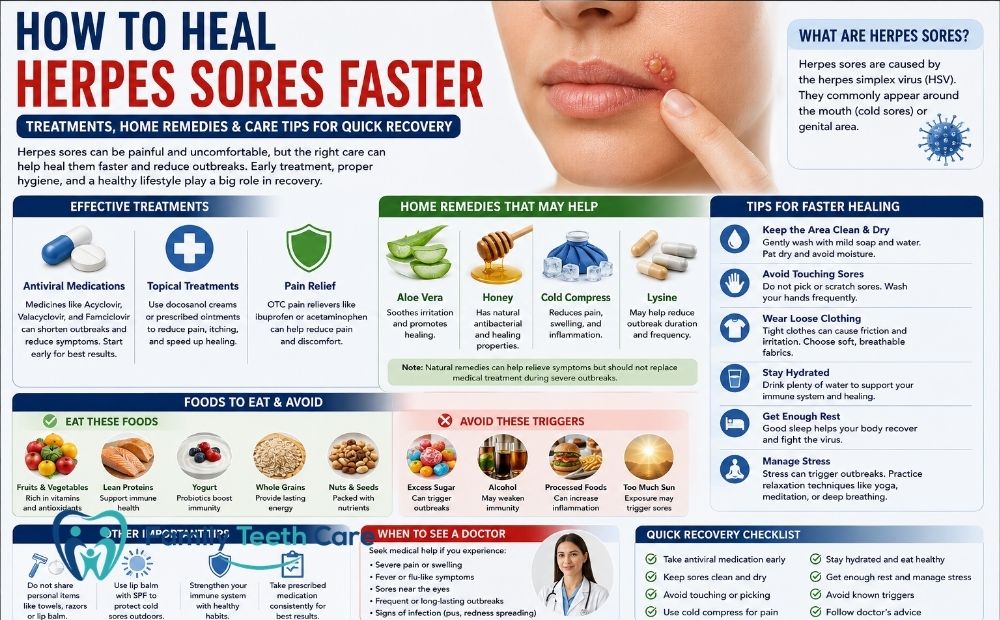
Many people search for ways to learn how to heal herpes sores faster because outbreaks can be painful, uncomfortable, and emotionally stressful. Herpes sores may appear around the mouth or genital area and are usually caused by the herpes simplex virus. While there is currently no permanent cure for herpes, several treatments and care methods can help sores heal faster and reduce discomfort significantly.
Herpes infections are very common worldwide and can affect people of different ages. You can learn more about the herpes simplex virus on Wikipedia. Understanding how outbreaks happen and how to manage symptoms properly can help reduce healing time and lower the risk of future flare-ups.
The good news is that many people successfully manage outbreaks using antiviral medication, healthy habits, and proper skin care.
What Causes Herpes Sores?
Herpes sores are caused by the herpes simplex virus, commonly known as HSV.
Main Types of Herpes Virus
- HSV-1
- HSV-2
HSV-1 is more commonly associated with oral herpes and cold sores, while HSV-2 is more often linked to genital herpes. However, both types can affect different areas of the body.
Common Symptoms of Herpes Outbreaks
Herpes outbreaks often begin with warning signs before visible sores appear.
Early Symptoms
- Tingling
- Burning sensation
- Itching
- Redness
- Mild pain
Small blisters usually appear afterward and may eventually break open before healing.
How Long Do Herpes Sores Last?
Without treatment, herpes sores may last between one and three weeks depending on the severity of the outbreak.
First outbreaks are often more painful and longer-lasting than future flare-ups.
Antiviral Medications for Faster Healing
Antiviral medications are one of the most effective ways to heal herpes sores faster.
Common Antiviral Medicines
- Acyclovir
- Valacyclovir
- Famciclovir
These medications help slow viral activity, reduce symptoms, and shorten outbreak duration.
Why Early Treatment Matters
Starting antiviral medication during the early tingling stage may help reduce the severity of sores before they fully develop.
Keep the Area Clean and Dry
Proper hygiene is important during outbreaks.
Tips for Skin Care
- Wash gently with mild soap
- Pat the area dry carefully
- Avoid excessive moisture
- Wear loose clothing
Keeping sores clean may help reduce irritation and lower infection risk.
Cold Compress for Pain Relief
Cold compresses may help reduce inflammation and discomfort.
How to Use a Cold Compress
- Wrap ice in a clean towel
- Apply gently for several minutes
- Avoid placing ice directly on the skin
Cold therapy may temporarily reduce burning and swelling.
Avoid Touching the Sores
Touching sores frequently may worsen irritation and spread the virus to other parts of the body.
Important Hygiene Tips
- Wash hands frequently
- Avoid picking scabs
- Do not share towels or razors
Proper hygiene helps reduce further irritation and contamination.
Stay Hydrated During Outbreaks
Hydration supports overall healing and immune function.
Benefits of Drinking Water
- Supports skin healing
- Reduces dryness
- Helps overall recovery
Many people forget the importance of hydration during illness and outbreaks.
Eat Immune-Supporting Foods
A healthy immune system may help the body manage herpes outbreaks more effectively.
Foods That May Support Healing
- Fruits and vegetables
- Lean proteins
- Yogurt
- Whole grains
- Foods rich in vitamins
Nutritious foods help support immune health during outbreaks.
Avoid Foods That Trigger Outbreaks
Some people report that certain foods seem to trigger flare-ups.
Common Reported Triggers
- Excessive sugar
- Alcohol
- Highly processed foods
- Stress-related overeating
Triggers vary from person to person, so keeping track of outbreaks may help identify patterns.
Reduce Stress Levels
Stress is one of the most commonly reported herpes outbreak triggers.
Ways to Manage Stress
- Better sleep
- Exercise
- Meditation
- Relaxation techniques
- Reduced workload pressure
Managing stress may help reduce outbreak frequency over time.
Get Enough Sleep
Sleep is important for immune function and overall recovery.
Lack of sleep may weaken the body’s ability to manage viral activity effectively.
Healthy Sleep Habits
- Maintain consistent sleep schedules
- Reduce screen time before bed
- Avoid excessive caffeine late at night
Good sleep supports faster healing and better immune health.
Avoid Friction and Irritation
Friction may worsen sores and slow healing.
Tips to Reduce Irritation
- Wear loose cotton clothing
- Avoid tight underwear
- Use gentle skin products
Reducing irritation helps sensitive skin recover more comfortably.
Can Natural Remedies Help?
Some natural remedies may provide temporary comfort, although scientific evidence varies.
Aloe Vera Gel
Aloe vera may help soothe irritated skin.
Possible Benefits
- Cooling effect
- Temporary relief
- Reduced dryness
Use gentle products designed for sensitive skin.
Honey for Sores
Some studies suggest honey may have antibacterial and soothing properties.
Important Note
Natural remedies should never replace professional medical treatment during severe outbreaks.
Lysine Supplements
Some people use lysine supplements hoping to reduce outbreak frequency.
Scientific evidence is mixed, but some individuals report positive experiences.
Before Using Supplements
Consult a healthcare professional before starting supplements or alternative treatments.
Avoid Smoking and Excess Alcohol
Smoking and heavy alcohol consumption may weaken immune health and slow healing.
Reducing these habits may support overall recovery and reduce outbreak severity.
Exercise and Immune Health
Moderate exercise may support immune function and stress reduction.
Healthy Exercise Options
- Walking
- Yoga
- Light cardio
- Stretching
Overtraining during outbreaks may increase fatigue, so balance is important.
Can You Heal Herpes Sores Overnight?
Many people search online for overnight cures, but herpes sores usually require time to heal properly.
Some treatments may reduce symptoms quickly, but complete healing generally takes several days.
Why Some Outbreaks Are Worse Than Others
Outbreak severity varies depending on several factors.
Factors That Influence Outbreaks
- Stress levels
- Immune health
- Sleep quality
- Illness
- Hormonal changes
Understanding triggers may help reduce future flare-ups.
How to Prevent Future Outbreaks
Although herpes cannot currently be cured permanently, many people successfully reduce outbreaks with healthy habits and treatment plans.
Prevention Tips
- Take antiviral medication if prescribed
- Manage stress
- Get adequate sleep
- Maintain good hygiene
- Support immune health
Consistent self-care often improves long-term outbreak management.
When to See a Doctor
Professional medical care is important for severe or recurring symptoms.
Signs You Should Seek Medical Advice
- Severe pain
- Fever
- Difficulty urinating
- Frequent outbreaks
- Spreading sores
- Eye irritation
Medical professionals can provide diagnosis, antiviral medication, and personalized treatment recommendations.
Emotional Impact of Herpes
Many people experience stress, embarrassment, or anxiety after diagnosis.
It is important to remember that herpes is extremely common and manageable for most people.
Open communication with healthcare providers and partners can help reduce emotional stress.
Myths About Herpes Sores
Many myths exist online about herpes treatment and transmission.
Common Misconceptions
- Herpes only affects certain people
- Outbreaks always look severe
- Natural remedies cure herpes permanently
Reliable medical information is important for proper management.
Frequently Asked Questions
How to heal herpes sores faster naturally?
Good hygiene, stress management, sleep, hydration, and immune support may help reduce healing time naturally.
Do antiviral medications speed up healing?
Yes, antiviral medications are among the most effective ways to shorten outbreaks and reduce symptoms.
Can herpes sores heal in one day?
Most outbreaks require several days to heal, even with treatment.
Does stress trigger herpes outbreaks?
Yes, stress is one of the most commonly reported outbreak triggers.
Can you put ice on herpes sores?
Cold compresses may help reduce pain and swelling temporarily.
Is herpes curable permanently?
There is currently no permanent cure for herpes, but treatments can effectively manage symptoms.
What foods should be avoided during outbreaks?
Some people avoid excessive sugar, alcohol, and heavily processed foods during outbreaks.
Is herpes dangerous?
Most cases are manageable, but severe symptoms should always be evaluated by a healthcare professional.
Can exercise help prevent outbreaks?
Moderate exercise may support immune health and stress management.
Should sores be kept dry or moist?
Keeping the area clean and reasonably dry may help reduce irritation and support healing.
Final Thoughts
Many people search for ways to learn how to heal herpes sores faster because outbreaks can be uncomfortable and emotionally stressful. While herpes currently has no permanent cure, antiviral medications, healthy habits, and proper hygiene can significantly reduce healing time and discomfort.
Early treatment, stress management, hydration, sleep, and immune support often play major roles in outbreak recovery. Avoiding irritation and maintaining good hygiene may also help sores heal more comfortably.
Understanding triggers and following consistent self-care habits can help many people manage herpes outbreaks successfully while improving long-term quality of life.
For more info visit https://familyteethcare.com